A vessel that arrives at port for a safety inspection with instruments that were calibrated six months ago by a non-accredited workshop is not presenting a calibration record. It is presenting documentation that an inspector trained to evaluate it will identify as insufficient within minutes.
Port State Control inspections under the Paris MOU, Tokyo MOU, and other regional memoranda include equipment and safety system checks that reference the maintenance and calibration records of onboard instruments. SOLAS requirements for safety equipment, including pressure gauges, temperature sensors, flow measurement systems, and gas detection instruments, specify that these instruments must be maintained in working order and calibrated in accordance with the manufacturer’s specifications and applicable flag state requirements. Calibration performed by a laboratory without accreditation traceable to a recognised national metrology institute does not satisfy the “calibrated in accordance with” standard that these requirements reference.
Atlantic Services provides calibration services for maritime and offshore vessel instruments in Malaysia, with ISO/IEC 17025 accreditation under the SAC-SINGLAS scheme and ILAC MRA recognition that makes our certificates valid for vessels operating under any flag state whose national accreditation body is an ILAC MRA signatory. We calibrate pressure, temperature, flow, and safety instrumentation for vessels at berth and offshore platforms at anchor, with on-site capability that avoids the need to remove instruments from the vessel for laboratory calibration. The guides in this category cover what SOLAS and flag state requirements mean for vessel instrument calibration, what Port State Control inspectors check when they review calibration records, and how to structure a vessel calibration programme that holds up under any inspection regime your vessels operate under.
At a Glance: What Marine Vessel Calibration Compliance Requires
- SOLAS Chapter III, Chapter V, and related requirements reference calibration and maintenance of safety equipment. Flag state interpretations of these requirements vary, but the common standard across major flag states is that calibration must be performed by a competent body with documented reference standards and that calibration records must be available for inspector review
- Port State Control inspections under regional MOUs can result in deficiency notices or vessel detention for inadequate instrument maintenance and calibration records. A detention delays the vessel’s commercial schedule and triggers a follow-up inspection requirement that adds further cost and time
- ILAC MRA recognition means that an Atlantic Services calibration certificate issued in Malaysia is accepted by flag state authorities and Port State Control inspectors across all ILAC-member jurisdictions without requiring re-calibration or additional verification in another country
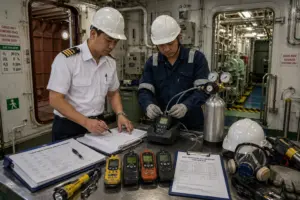
- On-site calibration for vessels at berth avoids the operational disruption and risk associated with removing instruments from a vessel for laboratory calibration. Atlantic Services provides on-site marine calibration with full accredited certificate output
Marine Calibration Fundamentals: What SOLAS, Flag State, and Port State Control Requirements Mean for Vessel Operators For fleet managers, vessel operators, and marine superintendents building their understanding of calibration compliance obligations
These guides explain the calibration obligations that apply to commercial vessels under SOLAS, flag state regulations, and Port State Control inspection frameworks. They translate regulatory language into operational requirements, covering which instrument types require calibration, at what intervals, by what standard of laboratory or service provider, and what documentation must be available onboard and ashore for inspection.
Marine Instrument Calibration: What SOLAS and Flag State Requirements Actually Demand Calibrating for Safety: Why Onboard Instrument Calibration Is a Maritime Compliance Requirement Port State Control and Calibration Records: What Inspectors Check and What Causes Deficiency Notices Types of Marine Instruments That Require Regular Calibration and Why
View Atlantic Services marine capability: Marine Instrument Calibration Services
On-Site Marine Calibration: How It Works and Why It Matters for Vessel Operations For fleet managers and marine superintendents managing calibration logistics for vessels at berth in Malaysia
These guides address the practical logistics of vessel instrument calibration, covering why on-site calibration at berth is the operationally appropriate approach for most marine instruments, how on-site calibration can carry ISO/IEC 17025 accredited status, what the process involves for a vessel at berth in Malaysian ports, and how ILAC MRA recognition ensures that Atlantic Services certificates satisfy flag state requirements regardless of the vessel's registration.
On-Site Marine Calibration in Malaysia: How It Works for Vessels at Berth How ILAC MRA Recognition Makes an Atlantic Services Certificate Valid for Any Flag State Inspection What a Marine Calibration Site Visit Involves: Process, Timeline, and Certificate Turnaround
Request on-site marine calibration: Contact Atlantic Services
Offshore Platform Calibration: Instrument Maintenance and Compliance for Fixed and Floating Installations For offshore installation managers and maintenance engineers responsible for instrument calibration on fixed platforms and FPSOs
Offshore platforms and floating production units present calibration logistics challenges that are distinct from vessel calibration: remote location, restricted access windows, the volume and criticality of process instruments, and the multiple regulatory frameworks that apply simultaneously. These guides address calibration programme management for offshore installations in Malaysian waters, covering how to prioritise instruments by criticality, how to structure calibration schedules around planned maintenance shutdowns, and what documentation requirements apply under PETRONAS CASC and Malaysian maritime regulatory frameworks.
Offshore Platform Instrument Calibration in Malaysia: How to Structure a Compliance Programme How to Prioritise Calibration for Safety-Critical vs Process Monitoring Instruments on an Offshore Platform Pressure and Temperature Instrument Calibration for FPSOs and Fixed Platforms in Malaysian Waters
Talk to our marine and offshore team: Contact Atlantic Services
Is your vessel's calibration documentation ready for the next Port State Control inspection? Atlantic Services reviews existing vessel calibration records against the PSC inspection criteria applicable to your vessel's flag state and trading routes, identifies instruments whose calibration status may attract a deficiency notice, and schedules remediation calibration before the inspection window.
Request a Marine Calibration Assessment