
What SINGLAS Is and Who Stands Behind It
SAC-SINGLAS → Singapore’s National Laboratory Accreditation Scheme
Who Administers It – The Singapore Accreditation Council
[LINK: SAC-SINGLAS → https://www.sac-accreditation.gov.sg] is the laboratory accreditation programme operated by the Singapore Accreditation Council, a statutory body under Enterprise Singapore. It is Singapore’s official national accreditation authority for testing and calibration laboratories, equivalent in function and standing to Malaysia’s Department of Standards Malaysia.
What It Accredits – Calibration and Testing Laboratories
SAC-SINGLAS accredits laboratories against [LINK: ISO/IEC 17025 → https://www.iso.org/standard/66912.html] the same international standard governing all accredited calibration laboratories globally. Accreditation under SINGLAS means the laboratory has been independently assessed as technically competent to produce valid calibration results within its defined scope.
How SINGLAS Compares to SAMM – Malaysia’s Equivalent Scheme
Same Standard, Different National Body
[LINK: SAMM → Skim Akreditasi Makmal Malaysia → https://www.jsm.gov.my] is administered by the Department of Standards Malaysia. Like SAC-SINGLAS, it accredits laboratories against ISO/IEC 17025. The governing standard and assessment criteria are the same. What differs is which national body conducts the assessment, and the ILAC MRA was designed specifically to make that difference irrelevant.
Why the Issuing Country Is Not the Validity Question
The validity of a calibration certificate depends on the accreditation status of the issuing laboratory, the scope of that accreditation, and the technical content of the certificate. It does not depend on which country the laboratory is physically located in, or which national body issued its accreditation. A SINGLAS-accredited lab in Singapore and a SAMM-accredited lab in Ipoh both produce ISO/IEC 17025-compliant certificates. Geographic origin is not a validity criterion.
The Legal Mechanism That Makes SINGLAS Valid in Malaysia

What ILAC MRA Is and How It Works
ILAC → The International Laboratory Accreditation Cooperation
[LINK: ILAC → https://ilac.org] is the international body that coordinates mutual recognition between national laboratory accreditation bodies worldwide. It was established specifically to eliminate the need for laboratories to be separately accredited in every country where their certificates are used, a duplication that would be unworkable for any cross-border industrial operation.
How the Mutual Recognition Arrangement Functions
The [LINK: ILAC MRA → https://ilac.org/ilac-mra-and-signatories/] is a formal treaty under which each signatory national accreditation body agrees that calibration certificates issued by laboratories accredited under any other signatory body will be accepted in their jurisdiction without further verification. Acceptance is based on the shared commitment to ISO/IEC 17025, not on bilateral trust between countries.
What “Accredited Once, Accepted Everywhere” Means in Practice
In practice, this means that a QA manager in Penang who receives a calibration certificate from a Singapore lab can present it to a Shell vendor assessor, an ISO 9001 auditor, or an NPRA inspector without supplementary documentation. The treaty handles the recognition. The only preparation required is knowing the treaty exists and being able to point to it. A SINGLAS certificate requires no re-verification, re-validation, or local Malaysian supplementary certificate.
Malaysia and Singapore as ILAC MRA Signatories
DSM/JSM – Malaysia as a Signatory Through APAC MRA
The Department of Standards Malaysia is a signatory to the [LINK: APAC MRA → https://www.apac-accreditation.org/mra/], the Asia Pacific Accreditation Cooperation Mutual Recognition Arrangement, which operates under ILAC. Malaysia’s signatory status means calibration certificates issued under any ILAC MRA-recognised accreditation body, including SAC-SINGLAS, are recognised as equivalent in Malaysia.
SAC → Singapore as a Signatory
The Singapore Accreditation Council holds direct ILAC MRA signatory status for its laboratory accreditation programmes, including SAC-SINGLAS. This status is listed on the ILAC website and is publicly verifiable.
What Signatory Status Means for Cross-Border Certificate Acceptance
When both the issuing body (SAC-SINGLAS) and the receiving jurisdiction’s national body (DSM/JSM) are ILAC MRA signatories, the calibration certificate is fully internationally recognised. No additional endorsement, localisation, or re-testing is required.
Where This Recognition Is Formally Documented and How to Prove It to an Auditor
The [LINK: ILAC MRA signatory list → https://ilac.org/ilac-mra-and-signatories/] is publicly accessible and names every national accreditation body holding MRA signatory status, including both SAC (Singapore) and DSM/JSM (Malaysia). Printing this page and keeping it with your calibration records gives you an immediately usable reference during any audit challenge. This single document has resolved more certificate disputes than any amount of verbal explanation.
What Your Auditor Is Actually Checking on a SINGLAS Certificate
The Accreditation Body Logo and Certificate Number
Where the SAC-SINGLAS Mark Appears on a Valid Certificate
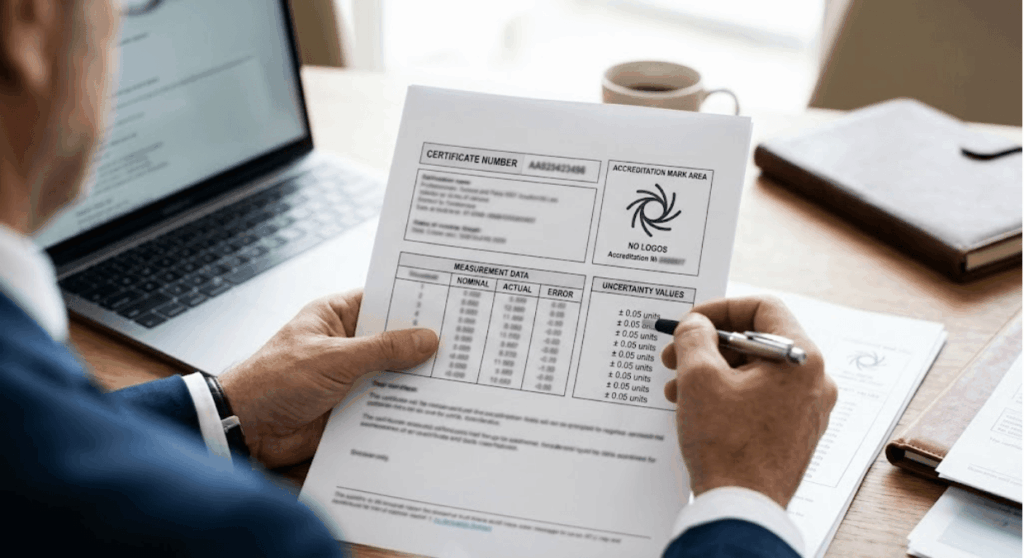
A certificate issued by a SAC-SINGLAS accredited laboratory carries the SAC-SINGLAS accreditation mark, a logo identifying the issuing accreditation body and the laboratory’s accreditation number. This mark is the primary visual signal that the certificate was issued under an accredited quality system.
How to Cross-Reference It on the SAC Online Registry
The accreditation number on the certificate can be verified on the [LINK: SAC online registry → https://sacinet2.enterprisesg.gov.sg/sacsearch/search]. Entering the number returns the laboratory’s current accreditation status, date of last assessment, and full scope of accreditation. If the number returns a current, active listing, the certificate is issued by a currently accredited laboratory. This verification takes less than 2 minutes and provides the most direct response to any auditor challenge.
Scope of Accreditation: The Detail Most People Overlook
Why the Lab’s SINGLAS Accreditation Must Cover the Specific Instrument Calibrated
SINGLAS accreditation is scope-specific. A laboratory accredited for dimensional calibration is not automatically accredited for pressure or electrical calibration. The certificate is only issued as an accredited calibration if the instrument type and measurement range fall within the laboratory’s accredited scope.
How to Verify the Lab’s Scope Before the Audit
The lab’s scope of accreditation is available for download from the SAC registry. Before your next audit, download the scope document and cross-reference every instrument type and range against it. Any instrument outside the lab’s scope, even if the lab holds SAC-SINGLAS accreditation for other instruments, will produce a certificate that is not accredited for that specific work.
Measurement Traceability: The Chain the Auditor Follows
What Traceability to NMC or NIST Means on a Certificate
A compliant certificate states that reference standards used during calibration are traceable to a national metrology institute, typically [LINK: Singapore’s National Metrology Centre (NMC) →A*STAR National Metrology Centre (NMC) ] or the [LINK: US National Institute of Standards and Technology (NIST) → https://www.nist.gov]. This is the documented chain connecting your instrument’s result to an internationally recognised measurement reference.
Why Singapore’s NMC Is Internationally Recognised as a Primary Reference
Singapore’s NMC is a member of the [LINK: CIPM MRA → https://www.bipm.org/en/cipm-mra], the Mutual Recognition Arrangement of the International Committee for Weights and Measures, meaning its measurement standards are internationally recognised as primary references. Traceability to NMC is equivalent in standing to traceability to Malaysia’s NMIM, the UK’s NPL, or any other CIPM MRA member national laboratory.
Measurement Uncertainty: The Technical Field Most Certificates Get Wrong
What Expanded Uncertainty and Coverage Factor (k) Look Like
A compliant certificate states measurement uncertainty as an expanded uncertainty value with a stated coverage factor, for example: “Expanded uncertainty: ±0.05mm, k=2, confidence level 95%.” This means the true value falls within ±0.05mm of the stated result in 95 out of 100 measurements.
Why Certificates Without Uncertainty Values Fail ILAC and ISO 17025 Requirements
A certificate showing only pass/fail results, without uncertainty values, does not meet ISO/IEC 17025 requirements, regardless of which accreditation logo it carries. If your SINGLAS certificate is missing uncertainty values, the issue is not with SINGLAS; it is with the specific certificate, and the laboratory should be asked to reissue it in a compliant format.
The Certificate Date and Calibration Interval: Timing Compliance
An auditor will verify that calibration was performed within the required interval and that the certificate is current at the time of audit. A valid SINGLAS certificate that has expired, where the calibration interval has passed without recalibration is a non-conformance regardless of its geographic origin. Interval management is the certificate holder’s responsibility.
What to Do If an Auditor Still Raises an Objection
Why Objections Happen: Auditor Knowledge Gaps, Not Certificate Failures
An auditor who raises a concern about a SINGLAS certificate is almost always expressing unfamiliarity with the ILAC MRA framework rather than identifying a genuine non-conformance. The appropriate response is calm, documented, and based on publicly verifiable international agreements, not concessions.
Conceding the objection, agreeing to switch labs or accepting a non-conformance on an otherwise valid certificate creates a false precedent and real operational cost.
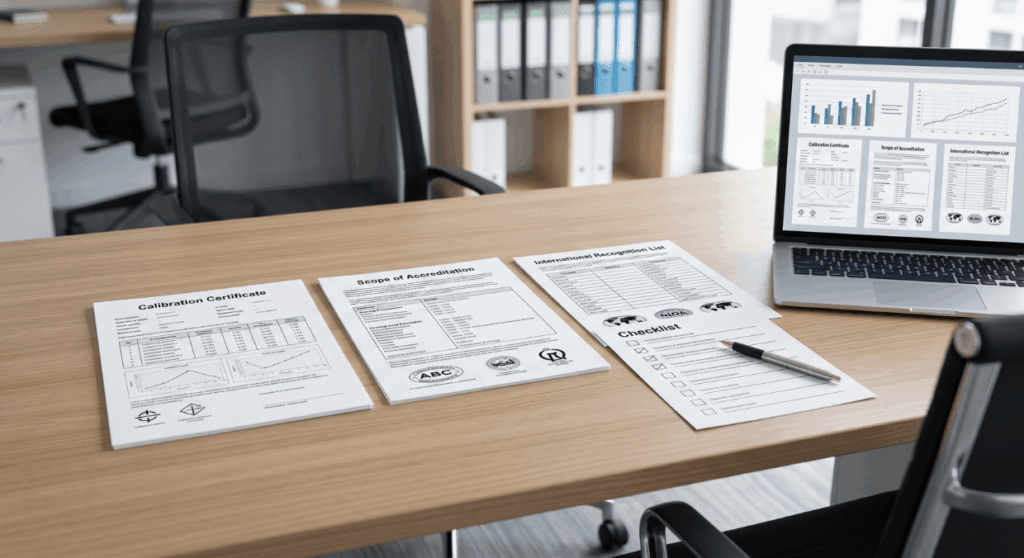
The Three Documents to Have Ready Before Every Audit
The Calibration Certificate Itself
The certificate must carry the SAC-SINGLAS mark, a verifiable certificate number, stated measurement results, uncertainty values with coverage factor, and a traceability statement. If it contains all of these elements, it is a fully compliant calibration certificate.
The Lab’s Current SAC-SINGLAS Scope of Accreditation
Downloaded directly from the SAC online registry on or shortly before the audit. This shows the auditor that the laboratory is currently accredited and that the instruments in your records fall within its accredited scope.
The ILAC MRA Signatory List
Printed or saved from ilac.org. This document shows both SAC (Singapore) and DSM/JSM (Malaysia) as current ILAC MRA signatories, establishing the formal international framework under which the certificate is recognised in Malaysia.
How to Explain ILAC MRA to an Auditor in Plain Language
“The ILAC Mutual Recognition Arrangement is an international treaty between national laboratory accreditation bodies. Both Malaysia’s DSM and Singapore’s SAC are signatories. Under this arrangement, calibration certificates issued by SAC-SINGLAS-accredited laboratories are recognised in Malaysia without additional verification, the same as a SAMM certificate. The signatory list is publicly available at ilac.org, and I have it here.”
This explanation cites a verifiable source, names the specific bodies involved, and uses the auditor’s own framework, recognition through a formal standard, as the reference point.
When to Escalate, And to Whom
If an auditor persists after you have produced all three documents, request that the finding be formally documented before you accept it. A formal finding gives you the right to respond with documented evidence during the corrective action process. In most cases, the finding will be withdrawn when reviewed by the lead auditor or certification body’s technical team, who are more likely to be familiar with ILAC MRA than a field assessor.